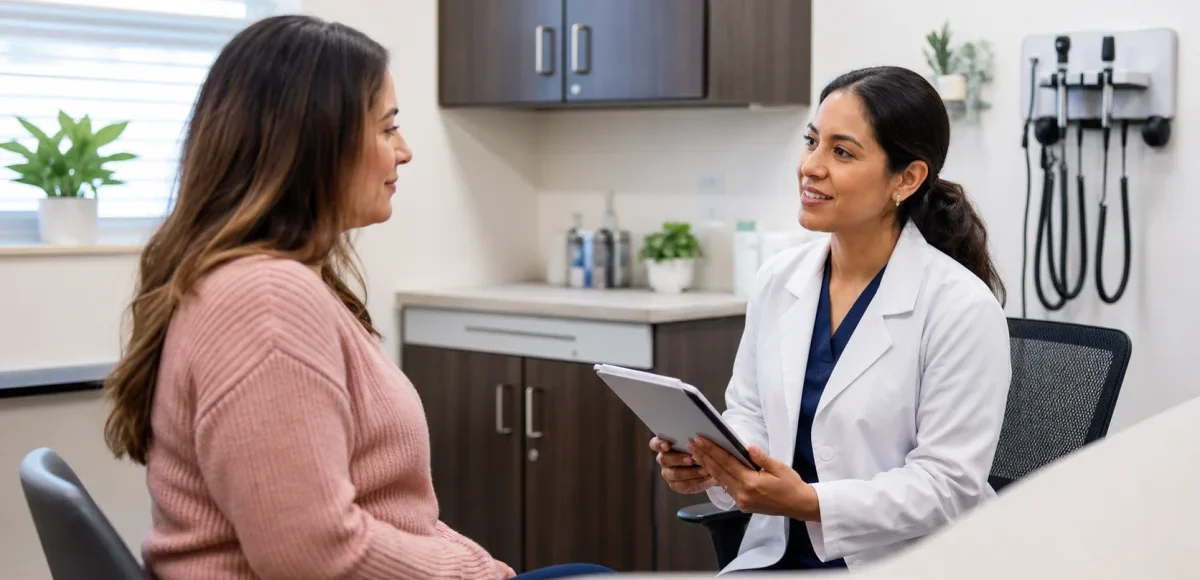
A well-woman exam is a preventive health visit. It is a time to talk about your body, periods, sexual health, birth control, pregnancy goals, menopause symptoms, screenings, and any concerns you have been putting off.
Many patients feel nervous before the first visit. Knowing what may happen can make the appointment feel less intimidating. This article is general education. Your visit may be different based on age, symptoms, health history, and personal preferences.
Before the visit
You do not need to prepare in a special way. Bring your insurance information, medication list, vaccine records if available, and any questions you want answered. If you track periods, symptoms, or birth control side effects, bring those notes too.
The conversation comes first
A well-woman visit usually starts with questions. Your clinician may ask about periods, pain, bleeding changes, pregnancy history, sexual health, urinary symptoms, mood, safety at home, family history, and medications.
You can ask for privacy, clarification, or more time. You can also say if a topic is hard to discuss. The goal is respectful care, not embarrassment.
Screenings depend on age and history
Not every patient needs every screening at every visit. Your clinician may discuss cervical cancer screening, breast health, STI testing, blood pressure, diabetes risk, cholesterol, vaccines, pregnancy testing, or other labs depending on your needs.
Birth control and pregnancy goals
A well-woman exam is a good time to talk about birth control, side effects, missed pills, emergency contraception questions, or plans for pregnancy. You do not need to know what method you want before the appointment.
Privacy and comfort matter
You can ask for a chaperone, ask the clinician to slow down, or ask to pause. Respectful care includes explaining each step, answering questions, and giving you room to make informed choices.
All American Community Health Center provides women’s health services for Pomona-area patients. Learn more about Well-Woman Exams, review our services, or request an appointment.
What concerns can you bring up?
You can bring up heavy periods, painful periods, missed periods, pelvic pain, discharge, pain with sex, breast changes, hot flashes, mood changes, bladder symptoms, pregnancy plans, miscarriage history, or concerns about sexually transmitted infections. Nothing is too embarrassing to ask about.
If you are not sure whether a concern belongs in a well-woman visit, bring it anyway. Your clinician can address it or help schedule the right follow-up.
How often do you need this visit?
Many patients benefit from a yearly women’s health conversation, but specific exams and screenings are not always needed every year. Timing depends on age, Pap test history, symptoms, sexual history, pregnancy goals, and risk factors.
Ask your clinician what is due now and what can wait. Understanding the schedule can reduce anxiety and help you plan ahead.
After the appointment
Before you leave, ask how results will be shared and when to expect them. If medication, birth control, lab work, or imaging is ordered, make sure you understand the next step.
If you receive results and do not understand them, call the clinic. It is better to ask than to guess.
Screenings outside the pelvic exam
Women’s health is broader than reproductive organs. Your clinician may also ask about blood pressure, diabetes risk, cholesterol, vaccines, depression, anxiety, sleep, tobacco use, alcohol use, and safety. These topics are part of whole-person care.
If you have a primary care clinician and a women’s health clinician, make sure each knows about major results and medications. Coordinated care helps avoid gaps.
Trauma-informed care
Some patients have past experiences that make exams difficult. You can ask to talk before changing clothes, request a support person when appropriate, ask for a chaperone, or ask the clinician to explain each step before touching.
You are allowed to ask questions. You are allowed to pause. You are allowed to understand why something is recommended.
FAQ
Do I need a pelvic exam every year?
Not always. It depends on symptoms, age, screening history, and clinician recommendations.
Can I ask about birth control during the visit?
Yes. A well-woman visit is a good time to discuss options and concerns.