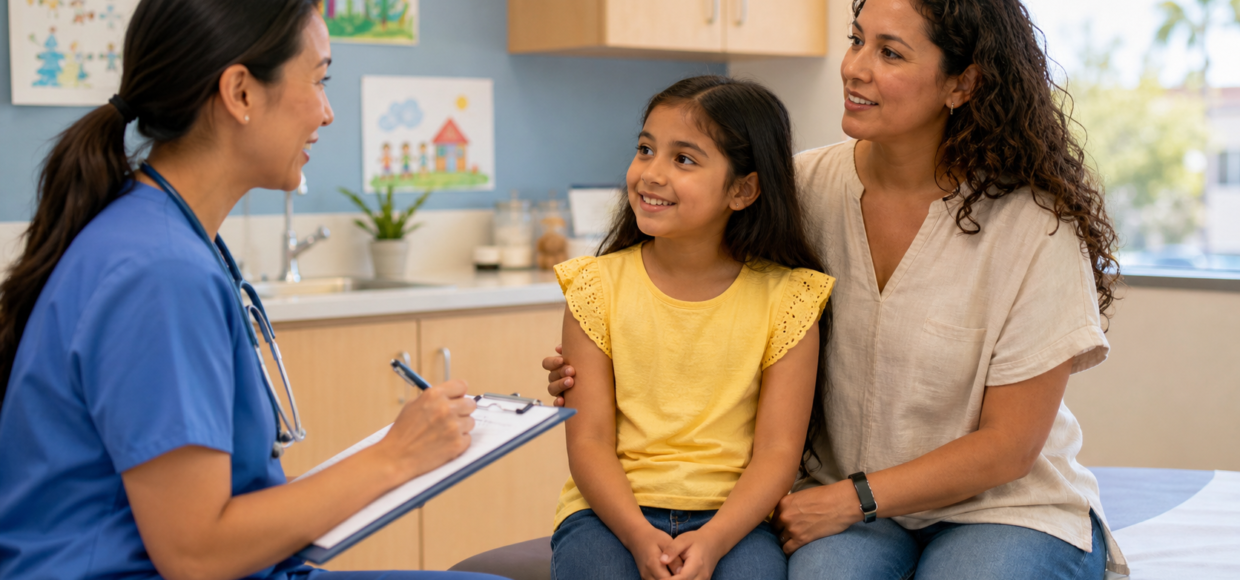
School forms, sports forms, vaccine records, and growth questions can all pile up quickly for parents. A school physical or well-child visit is a practical time to make sure your child’s health information is up to date and to talk with a pediatric care team about development, nutrition, sleep, asthma, allergies, behavior, and any concerns that have come up at home or school.
For families in Pomona and nearby communities, a local community health clinic can help make pediatric care easier to access. This guide explains what parents can expect from school physicals and well-child visits, what to bring, and how to use the appointment well. It is educational and does not replace medical advice from your child’s clinician.
What is the difference between a school physical and a well-child visit?
A school physical is often requested by a school, childcare program, camp, or sports program. It may focus on whether a child has the health information required to participate safely. A well-child visit is broader. It looks at growth, development, prevention, vaccines, family questions, and age-based health guidance.
In many cases, the same appointment can cover both needs if you bring the required forms. The clinician can complete appropriate paperwork and also address broader pediatric care topics. All American CHC offers pediatric care, pediatric visits, and well-child care for families seeking ongoing support.
What happens during the visit?
The exact visit depends on your child’s age and needs. The care team may check height, weight, blood pressure, vision, hearing, and other age-appropriate measurements. The clinician may review medical history, medications, allergies, past injuries, hospital visits, and family history. For sports forms, questions about chest pain, fainting, shortness of breath, head injuries, and past exercise symptoms may be especially important.
Parents should expect questions about sleep, eating, school performance, activity, screen time, mood, safety, and development. Teens may be offered time to speak privately with the clinician when appropriate. This helps young people practice asking health questions and gives them a safe space to discuss concerns.
What parents should bring
Bringing the right information helps the appointment go smoothly. If you do not have every record, still schedule the visit and ask what can be updated later.
- School, camp, sports, or childcare forms that need completion
- Vaccine records or a school immunization printout
- Medication list, including inhalers, allergy medicine, and over-the-counter items
- Information about allergies, surgeries, injuries, or hospital visits
- Glasses, contact lenses, hearing aids, or assistive devices if used
- Insurance card if available and parent or guardian identification
- Questions from parents, caregivers, teachers, or coaches
If your child has asthma, bring the inhaler name and any school medication forms. If your child has a chronic condition, bring the most recent care plan if you have one.
Common topics to discuss
Growth and development
Growth charts help clinicians see patterns over time. A single measurement is less important than the overall trend. If you are worried about height, weight, appetite, picky eating, puberty, or development, bring it up during the visit.
School performance and behavior
Health can affect school, and school can affect health. Trouble sleeping, headaches, stomachaches, anxiety, attention concerns, bullying, and family stress can all show up in the classroom. A pediatric visit can help parents decide whether more evaluation or support may be useful.
Asthma, allergies, and activity
If your child coughs during exercise, uses an inhaler, or has allergies that affect school, ask about next steps. The clinic offers childhood asthma care and can help families talk through symptoms, triggers, and school planning.
Vaccines and records
Schools may require proof of immunizations. Your clinician can review available records and discuss what is due. If records are incomplete, ask what steps can help update them.
When to schedule
Try to schedule school physicals before forms are due, especially before the start of the school year or sports season. Waiting until the last week can make scheduling harder. If your child needs vaccines, follow-up, lab work, or additional paperwork, extra time may be needed.
For a new symptom such as fever, ear pain, sore throat, vomiting, breathing trouble, or a worsening rash, ask whether a same-day care visit is more appropriate than a routine physical. Severe or life-threatening symptoms should be evaluated through emergency services.
Questions parents can ask
- Is my child’s growth pattern on track?
- Are any vaccines or records missing?
- Does this sports form require anything beyond today’s exam?
- Should we talk more about sleep, eating, mood, or school concerns?
- Does my child need a follow-up visit for asthma, allergies, or another condition?
- What symptoms should prompt us to call the clinic sooner?
Care for families across Pomona and nearby communities
A local pediatric care team can help families stay organized from infancy through the teen years. All American CHC serves Pomona and nearby communities, including families who may need help with insurance questions, records, or appointment planning. You can review clinic coverage information on the insurance page and learn more about local service areas on the Service Areas page.
Book a pediatric visit
If your child needs a school physical, sports form, or well-child visit, request an appointment through the appointment page. For questions about forms or what to bring, contact the clinic through Contact Us.
FAQ
Can a school physical count as a well-child visit?
Sometimes, depending on what is covered during the appointment and what your child needs. Bring the school form and ask the clinician.
What if I do not have vaccine records?
Tell the clinic when you schedule. The care team can explain what information may be needed and how records may be updated.
Should my child come in if they are sick on the day of a physical?
Call the clinic for guidance. A sick visit or same-day care appointment may be more appropriate depending on symptoms.
If your child needs follow-up after the visit
Sometimes a school physical raises a question that needs more time than the form itself. Your child may need a follow-up appointment for asthma symptoms, headaches, sleep problems, growth concerns, mood changes, or a medication refill. That does not mean something is wrong with your child. It means the clinician wants to give the concern the attention it deserves. Before you leave, ask what the next step is, whether your child can attend school or sports while follow-up is pending, and whether the school needs any temporary instructions.